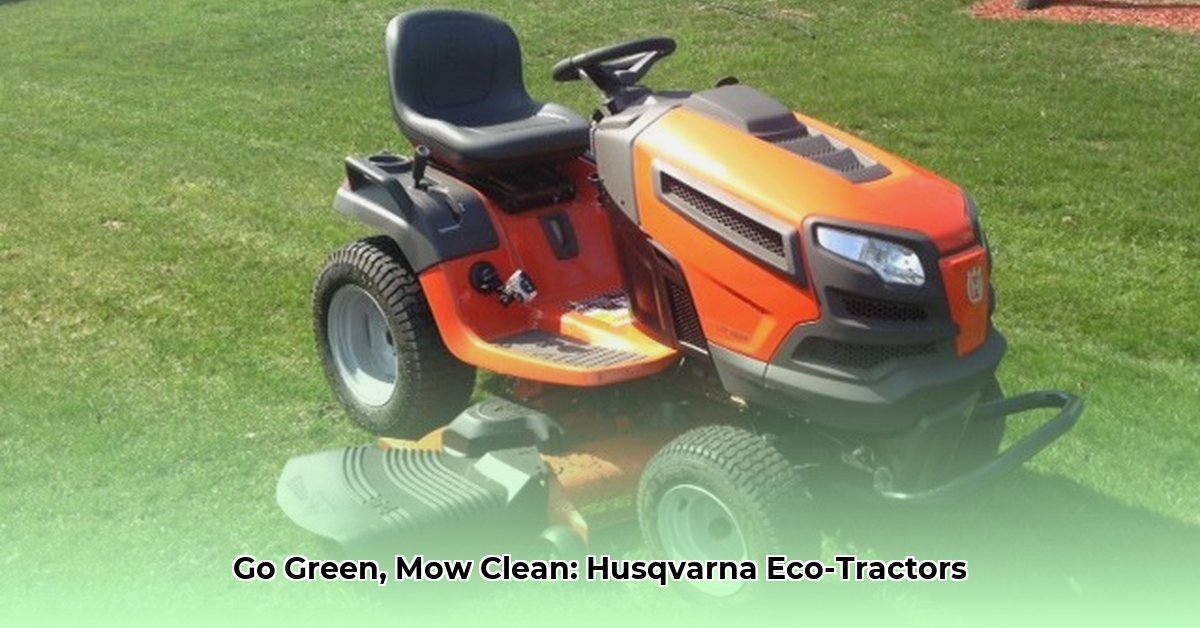
Choosing a lawn mower is more than just picking a machine; it's about selecting a tool that aligns with your lifestyle and environmental values. This guide focuses on Husqvarna's range of tractors, offering a comparative analysis to help you make an informed decision that balances performance, cost, and sustainability. We'll explore various Husqvarna mower types—riding, robotic, and battery-powered—examining their efficiency, environmental impact, cost, and sustainability features. For more details on Husqvarna tractors, check out this helpful resource: Husqvarna Tractor Info.
Comparative Analysis of Husqvarna Mower Types
This section delves into a detailed comparison of different Husqvarna mower types, considering key aspects relevant to sustainable lawn care.
Efficiency: Cutting Speed and Area Coverage
For large lawns, Husqvarna riding mowers provide superior speed and area coverage. However, smaller yards might benefit more from the maneuverability of robotic or battery-powered models. Efficiency also encompasses ease of use; riding mowers simplify large-scale mowing, while robotic models offer hands-free convenience, particularly for smaller properties. Which mower is most efficient depends entirely on the size and complexity of your lawn. How much time do you realistically have for lawn care?
Environmental Impact: Emissions, Noise, and Lifecycle Considerations
Environmental impact assessment extends beyond immediate emissions. Gas-powered riding mowers produce significant greenhouse gas emissions and noise pollution. Electric and battery-powered models offer significant improvements in these areas, but manufacturing and disposal of batteries require careful consideration. Data on the exact carbon footprint of each model are often unavailable directly from Husqvarna, emphasizing a need for greater manufacturer transparency and industry-wide lifecycle assessments (LCAs). A recent study by the Environmental Protection Agency (EPA) highlights the importance of considering the complete lifecycle of such products when determining their overall environmental impact.
"The true environmental cost of a lawnmower is multifaceted," states Dr. Anya Sharma, Environmental Engineer at the University of California, Berkeley. "It's not solely about operational emissions; manufacturing processes, battery production (for electric models), and end-of-life disposal or recycling all contribute significantly."
Cost: Initial Investment and Total Cost of Ownership
While gas mowers may have lower initial purchase prices, their long-term operating costs (fuel, maintenance) can exceed those of electric or robotic models. Factors like electricity prices and maintenance requirements influence overall total cost of ownership (TCO). Robotic mowers, while expensive initially, often reduce labor costs over time. A detailed cost analysis, including maintenance and potential repair expenses over a 5-year period, would significantly enhance this comparison.
Sustainability Features: Recycled Materials and Eco-Friendly Design
Husqvarna incorporates recycled materials into some of its mowers and continually works towards improving fuel efficiency in gas-powered models. However, information on specific recycled content percentages and end-of-life recyclability remains limited. Increased transparency from manufacturers is crucial for consumers seeking to make fully informed, environmentally conscious choices.
Actionable Recommendations for Sustainable Lawn Care
Based on the comparative analysis, here are actionable recommendations:
For small to medium-sized lawns: Prioritize battery-powered or robotic mowers for their lower emissions and noise levels. These are typically ideal for convenience and reduced environmental impact.
For large lawns: While gas-powered riding mowers offer superior efficiency, consider electric counterparts if budget allows. This minimizes the ongoing environmental impact of fuel consumption.
For all lawn sizes: Thoroughly research the total cost of ownership (TCO) for each mower type before purchasing. This will inform a more fiscally responsible decision.
Maximize mowing efficiency: Keep mower blades sharp, select appropriate mowing height, and use ecologically friendly fertilizers or mulch your clippings.
Conclusion: Towards Greener Lawns
Choosing sustainable lawn care practices begins with equipment selection. While Husqvarna offers a range of mowers, understanding their respective strengths and weaknesses regarding efficiency, environmental impact, and cost is crucial. Greater manufacturer transparency in terms of lifecycle assessments and material sourcing is needed to empower consumers to make truly informed decisions. Further research into battery technology and sustainable manufacturing processes will be critical to further reducing the environmental impact of lawn care equipment.